Showing posts with label Italian painters. Show all posts

Monday, 31 December 2012

Federico Zandomeneghi and Woman in Corset

'Woman in Corset' by Federico Zandomeneghi

Federico Zandomeneghi, born on 2 June 1841 and died on 31 December 1917

I will continue to post a painting a day for the month of December but I won't have time to write. I may add text at a later date. I hope you will still visit to see the daily painting.

Friday, 28 December 2012

Sunday, 23 December 2012

Friday, 21 December 2012

Francesco Hayez and The Kiss

Francesco Hayez, born on 10 February 1791 and died on 21 December 1881

Wednesday, 19 December 2012

Raffaello Sorbi and Grazzia


Raffaello Sorbi, born on 24 February 1844 and died on 19 December 1931

Monday, 17 December 2012

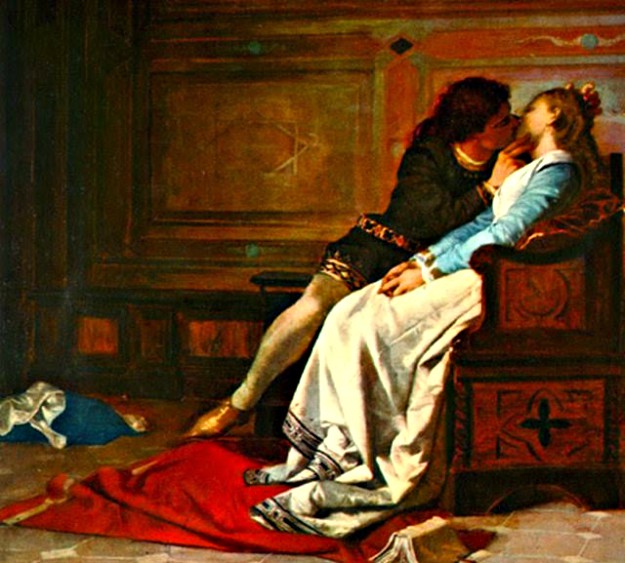
Amos Cassioli and Paolo and Francesca

Amos Cassioli, born on 10 August 1832 and died on 17 December 1891

Sunday, 16 December 2012

Simone Pignoni and Judith with the Head of Holofernes

Simone Pignoni, born on 17 April 1611 and died on 16 December 1698

Saturday, 15 December 2012

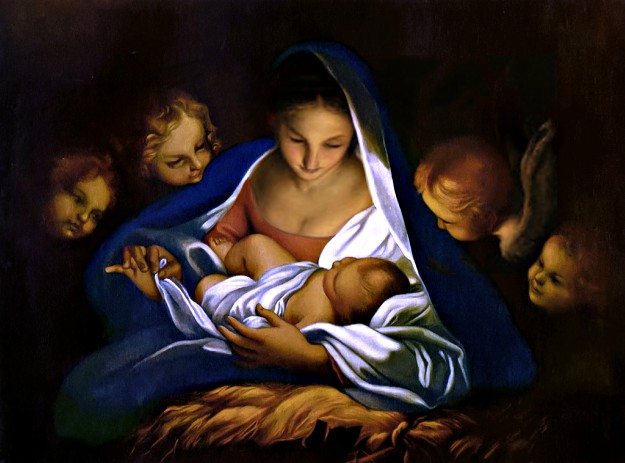
Carlo Maratta and The Holy Night


Carlo Maratti, born on 13 May 1625 and died on 15 December 1713

Monday, 10 December 2012

Friday, 30 November 2012

Francesco Granacci and Annunciation

Francesco Granacci, born in 1469 and died on 30 November 1543

During the NaNoWriMo Project, I will continue to post a painting a day for the month of November but I won't have time to write. I may add text at a later date. I hope you will still visit to see the daily painting. 

Sunday, 4 November 2012

Guido Reni and Girl With A Rose

'Girl With a Rose' (no date found) by Guido Reni; Museo del Prado, Madrid

Guido Reni, born on 4 November 1575 and died on 18 August 1642

Due to the NaNoWriMo Project, I will continue to post a painting a day for the month of November but I won't have time to write. I may add text at a later date. I hope you will still visit to see the daily painting. 

Sunday, 21 October 2012

Domenichino and The Cumaean Sibyl

 'The Cumaean Sibyl' (c. 1610) by Domenichino;
Pinacoteca Capitolina, Rome 

I'm happy to do a post on Italian painter Domenichino, born on October 21, 1581, as Domenico Zampieri because I get to post the painting 'The Cumaean Sibyl', which I like very much. Domenichino was a leading Baroque painter and worked with other Bolognese artists under Annibale Carracci. He painted frescoes on commission and paintings. The Last Communion of St. Jerome, dated 1614, is one of the period's greatest paintings and is holding its own with wonderful artworks like Transfiguration by Raphael. Today's painting of The Cumaean Sibyl is the version that is at the Pinacoteca Capitolina in Rome and belongs to the Albergati Collection. I wasn't aware before doing this post but apparently there are four known versions of Sibyl. All Sibyls have similar exotic turbans and rich fabrics. There is one at the Galleria Borghese, Rome, dated 1616-17, which is very similar to the one at the Pinacoteca. The Sibyl that is in the Wallace Collection in London is called The Persian Sibyl and is slightly different. Then there is a fourth Sibyl which Domenichino had painted for the Ratta family in Bologna but I couldn't find an image for that one. It must be very similar to the one at Pinacoteca Capitolina. Actually, while doing this post, I got a bit confused and stopped looking for the Ratta's Sibyl. Anyway, these are the sources for my little research on the different versions (click here and here). For further reading on The Cumaean Sibyl, click here.

Friday, 19 October 2012

Bonifacio Veronese and Madonna and Child with Saints

'Madonna and Child with Saints' (no date found) by Bonifacio Veronese; The Metropolitan Museum of Art, New York

I like adding new names to my list of Italian painters. I never knew that I loved Italian art this much. Today I'm happy to get to know Bonifacio Veronese or Bonifacio de' Pitati (I'm sticking to the Italian spelling of the name), born in 1487 and died on 19 October 1553. He was a contemporary of Titian and Palma Vecchio and was influenced by the style of old Venetian masters like Bellini and Giorgione. In Venice, he was a succesful painter of compositions of Madonna and Child. In the work shown here today, we see the young Christ balancing on his mother's hand. He's holding a blue globe and is blessing the infant John the Baptist who is surrounded by his parents, the saints Elizabeth and Zechariah.  On the other side are the saints Joseph and Catherine of Alexandria. I provided you with the links to the Wikipedia pages in case you want to polish up your biblical knowledge.The colour scheme in this painting of reds, blues and greens is very like early Titian and I think it is beautiful.

Monday, 8 October 2012

Filippo Lippi and Madonna with the Child and two Angels

'Madonna with the Child and two Angels' (1465) by Filippo Lippi; The Uffizi Gallery, Florence


Finally a post on an Italian painter again and none other than the wonderful Filippo Lippi, who was born c. 1406 and died on 8 October 1469. In Rome, I've seen his Annunciation which dates back to 1450 and is beautiful. It was such a shame that the room where the art work was on display, was so badly lit that you could not fully appreciate its splendor. Lippi was a 15th century painter of religious subjects, and when you read his biography (please click on his name above), you discover that he had quite an eventful life. After his parents died, he stayed with his aunt. When she couldn't take care of him anymore, he was brought up at a monastery (Santa Maria del Carmine in his birth town Florence). The frescoes in this monastery by Masaccio were probably Lippi's first contact with art. He took his religious vows at the age of sixteen but left the monastery when he was 26 years old. There are some interesting pieces of information about his life. He was supposedly abducted by Moorish pirates on the Adriatic Sea and was being held captive for 18 months. He was only released after having painted a portrait of his abductor. He had a scandalous affair with a nun, Lucrezia Buti, who bore him a child. Both were released from their vows and got permission from the Pope to marry.  He was known for his bad behaviour and probably there wasn't anybody more unfit to be a monk than Lippi. For further reading, please click here. I had not initially chosen Madonna with the Child and Two Angels for today because most of the time I find the Madonna beautiful and the angels and child a bit ugly. So I had chosen Madonna delle Roccie which is a detail of a larger painting but I couldn't find which one. I was unsuccesful finding date and location and then thought, maybe it's a detail of this painting because the Madonnas look very similar. But then, there's no child's hand resting on Madonna's shoulder in the detail. So I have no clue. I found both paintings together on this blog but there's no further enlightment here either, just a biography in French on the painter. If anybody knows, please leave a comment.

Saturday, 29 September 2012

'Esther before Ahasuerus' by Tintoretto

'Esther before Ahasuerus' (1547-48) by Tintoretto; Royal Collection, Windsor Castle

When you say Tintoretto, the great Italian painter who was born as Jacopo Comin on September 29, 1518, only his dark portraits come to mind and I feel like an art illiterate that I can't really tell you what his great paintings are or what he is known for. Tintoretto was one of the most important painters of the Italian Late Renaissance. His nickname 'Il Tintoretto' means 'the little dyer' and derives from his father's profession of dyer. He is usually described as a Mannerist painter and initally being inspired by the work of Michelangelo, he became increasingly concerned with the maximum use of chiaroscuro. He is said to have briefly studied with Titian but a mutual dislike caused an animosity between them that lasted throughout their careers. Unlike Titian, Tintoretto spent almost all of his life in Venice where his work is still to be seen in churches or other buildings. After Titian's death in 1576, he was one of the leading artists of Venice, together with Paolo Veronese. He was most productive between 1564 and his death in 1594. His most famous works are the pictorial decorations he made for the rooms of La Scuola Grande di San Rocco in Venice (click here to see one of the paintings on the ceiling, and to see more, click here). Also the four paintings he did for the Scuola Grande di San Marco (his St. Mark paintings) are considered to be masterpieces, click here. The painting I chose for today is a religious one of 'Esther before Ahasuerus', painted at a time that Tintoretto's career was about to take off. The artwork illustrates the Old Testament story of the Jewish heroine Esther who appears, unbidden, before the King Ahasuerus and pleads for her people, breaking court etiquette and risking her life. She had fasted for three days to prepare herself and faints in his presence. She gets her wish granted. I like this painting because of the story and the beautiful depiction and colours. And I love doing this blog because now I know more about the great Tintoretto and will never forget what he is known for.

Tuesday, 18 September 2012

Mauro Gandolfi and Portrait of a Young Girl in Sarafan and Kokoshnik

'Portrait of a Young Girl in Sarafan and Kokoshnik' (1820s) by Mauro Gandolfi; Museum of Tropinin and His Contemporaries, Moscow

Today I chose a painting of Italian artist Mauro Gandolfi, born on 18 September 1764, son of painter Gaetano Gandolfi. I googled the images of his paintings and I liked this one and Head study of an elderly bearded man. Gandolfi came from a family of artists (his uncle was Ubaldo Gandolfi). The Gandolfi had a period of collective productivity from 1760 till 1820 and produced many paintings and drawings, frescoes and sculptures. Mauro was the eldest of seven children and ran away from home when he was 16 years old to join the French army. He returned to Bologna and studied art. His father was his chief mentor. The decade of the 1790s was Mauro's most productive period on a professional level.

Tuesday, 11 September 2012

Giovanni Maria Viani and The Penitent Magdalene

'The Penitent Magdalene' (no date found) by Giovanni Maria Viani; Private Collection?

Giovanni Maria Viani, born on 11 September 1636 in Bologna, was the last painter on my list for today to check for paintings. I had already dismissed all the other options and when I read that Viani was an Italian Baroque painter, I almost knew that I couldn't go wrong. I thought, maybe there is a depiction of The Penitent Magdalene, and voilà, there is. Together with Lorenzo Pasinelli, Viani was a pupil of Flaminio Torre. The first works to be attributed to Viani date from 1677. I couldn't find a date nor location for today's painting but I found that it recently sold at Sotheby's, click here. It was part of a private collection and it changed hands to an anonymous buyer so it's likely to be in private hands still. It sold for 37,250 GPB. There's a catalogue note included which states that this painting has been more recently attributed to Viani because it was formerly believed to be a work by Gian Gioseffo dal Sole. Well, whoever painted this, I think it is beautiful. I particularly love the depiction of the folded hands. For further reading, click here.

Tuesday, 4 September 2012

Lorenzo Pasinelli and Erythraean Sibyl

'Erythraean Sibyl' (no date found ) by Lorenzo Pasinelli; Galleria Nazionale d'Arte Antica, Rome

Today's painter was quickly chosen but it took me somewhat longer to choose the painting because there are many that I like. The artist is Lorenzo Pasinelli, an Italian Baroque painter, born on September 4, 1629. He trained with Guido Reni's most talented pupil Simone Cantarini and after Cantarini's sudden death in 1648 he continued his studies with Cantarini's pupil Flaminio Torre. With the latter he worked briefly and unsatisfactory and there remains some difficulty in attributing the paintings of this period to his name. To read more about Erythraean Sibyl (because I did not remember who she was, despite my classical high school background), please click on the link. If you want to see more of Pasinelli's paintings, visit his Wikipedia page and there's also more here and here and here.

Friday, 31 August 2012

Pietro Antonio Rotari and Girl With A Book

'Girl with a Book' (date not found) by Pietro Antonio Rotari ; location not found


I just recently discovered Italian painter Pietro Rotari, born on 30 September 1707 and died on 31 August 1762, through another blog. I immediately fell in love with this painting of a girl with a book. Googling his other paintings, I saw that there were more nice ones, like this and this one. I like Young Woman with a Fan a lot too. Born in Verona, Rotari studied in Venice, Rome and Naples. He returned to Verona in 1734 where he set up a private painting academy and produced historical and religious paintings that brought him national and international fame. He travelled further to Vienna and Dresden to work for aristocratic and royal patrons. In Dresden he received an invitation of Empress Elizabeth of Russia to come to St. Petersburg and become a court painter. Here at the court, Rotari perfected his style of portrait painting. He stayed the remainder of his life in St. Petersburg and worked for the Imperial family and Russian aristocracy.

Tuesday, 28 August 2012

Elisabetta Sirani and Cleopatra

'Cleopatra' (c. 1662-3) by Elisabetta Sirani; Private Collection

For today I have chosen another Italian painter but this time a female one, Elisabetta Sirani, born on 8 January 1638 and died on 28 August 1665 (the Italian page says 28, the English one mentions the 25th as the date of death). Sirani's father was Giovanni Andrea Sirani who had been the personal assistant of the artist Guido Reni. There's little known of Elisabetta's training but as a woman she would not have had access to any academy and was probably her father's pupil. Her style is close to Reni's, idealised but with strong colours and chiaroscuro. She painted portraits, religious themes and allegories and worked very fast. By the time she died, at 27, she had completed approximately 170 paintings, 14 etchings and also a number of drawings. She was buried in Guido Reni's tomb.