Friday, 31 August 2012

Pietro Antonio Rotari and Girl With A Book

'Girl with a Book' (date not found) by Pietro Antonio Rotari ; location not found


I just recently discovered Italian painter Pietro Rotari, born on 30 September 1707 and died on 31 August 1762, through another blog. I immediately fell in love with this painting of a girl with a book. Googling his other paintings, I saw that there were more nice ones, like this and this one. I like Young Woman with a Fan a lot too. Born in Verona, Rotari studied in Venice, Rome and Naples. He returned to Verona in 1734 where he set up a private painting academy and produced historical and religious paintings that brought him national and international fame. He travelled further to Vienna and Dresden to work for aristocratic and royal patrons. In Dresden he received an invitation of Empress Elizabeth of Russia to come to St. Petersburg and become a court painter. Here at the court, Rotari perfected his style of portrait painting. He stayed the remainder of his life in St. Petersburg and worked for the Imperial family and Russian aristocracy.

Thursday, 30 August 2012

Jacques-Louis David and The Oath of the Horatii (detail)

'The Oath of the Horatii' (detail) (1784); Musée du Louvre, Paris

Today's artist is Jacques-Louis David, born on 30 August 1748, the most influential painter of the Neoclassical movement in France. He received his first training from François Boucher, a distant relative, and continued to study under Joseph-Marie Vien. He became frustrated when he failed the competition for the Prix de Rome, an art scholarship to study at the French Academy in Rome, several times. His fifth attempt was finally succesful and he went to Rome with Vien in 1775. He returned to Paris in 1780 and established his position as an opponent of the Rococo movement. David was politically very active and a supporter of the French Revolution and Robespierre. He was also an ardent supporter of Napoleon and was able to keep his social and artistic position during Napoleon's reign. So apart from being famous for his art, there is more to remember him by but not all in a positive way. For further reading, please click on the painter's link above. Probably David's most famous painting is The Death of Marat, a painting of the French revolutionary Jean-Paul Marat who was found stabbed to death in his bathtub. I would recommend to read more about this painting because it is very interesting and historical. The painting that I have chosen for today, The Oath of the Horatii, is also very famous. You can click here to see it in full. The reason why I have decided to post only a fragment is because every time that I see an image of this painting, my eyes get drawn to the right where the women are seated. They are weeping and awaiting the results of the fighthing between the brothers of the two families. It's too much to explain the painting's story in my own words so I want to refer you to the painting's link. I think the women are beautifully portrayed in their distress and I like the silk garments very much. One more note: David had a lot of pupils, amongst others Jean-Auguste Dominique Ingres, yesterday's painter. He left behind a rich legacy and to be his pupil was considered to be prestigious.

Wednesday, 29 August 2012

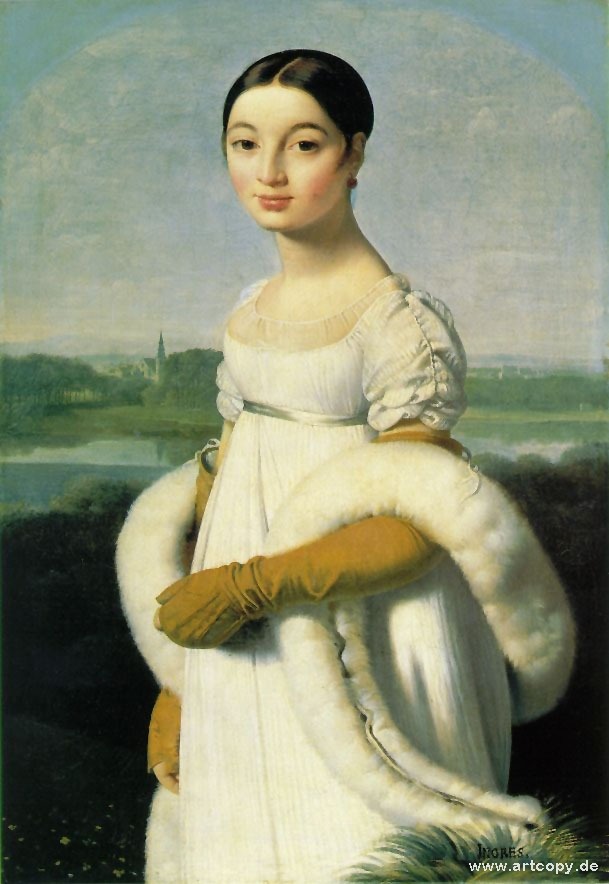
Jean-Auguste Dominique Ingres and Mademoiselle Caroline Rivière

'Mademoiselle Caroline Rivière' (1806) by Jean-Auguste Dominique Ingres;
Musée du Louvre, Paris

Today the choice was easy. French artist Jean-Auguste Dominique Ingres, born on 29 August 1780, is a well-known painter of portraits and oriental subjects. He was actually one of the greatest portrait painters of the 19th century. The son of an unsuccesful painter and sculptor, he studied under Jacques-Louis David in Paris. He won the Prix de Rome for his painting 'The Ambassadors of Agamemnon'. He went to Rome for quite an extensive period (1806-1820) where he developed his style and drawing. His style is influenced by both David and the Italian Renaissance painter Raphael. After Rome he went to Florence and stayed there for four years. Upon his return to Paris, he was very succesful and became the recognised leader of the Neoclassicists. To read more about his life and work, I want to refer you to the link above. Today's painting I find beautiful and it is the third of three portraits of the Rivière family that Ingres painted that year. The other two portraits are of Caroline's father and mother. Early on in his career, Ingres painted commissioned portraits for wealthy patrons. Today's portrait was painted in 1806, before his Rome period. Caroline, the portrayed girl, would have been between thirteen and fifteen years old at the time of the painting. The portrait is seen in the light of tragedy since the sitter died within a year after completion of the work.  

Tuesday, 28 August 2012

Elisabetta Sirani and Cleopatra

'Cleopatra' (c. 1662-3) by Elisabetta Sirani; Private Collection

For today I have chosen another Italian painter but this time a female one, Elisabetta Sirani, born on 8 January 1638 and died on 28 August 1665 (the Italian page says 28, the English one mentions the 25th as the date of death). Sirani's father was Giovanni Andrea Sirani who had been the personal assistant of the artist Guido Reni. There's little known of Elisabetta's training but as a woman she would not have had access to any academy and was probably her father's pupil. Her style is close to Reni's, idealised but with strong colours and chiaroscuro. She painted portraits, religious themes and allegories and worked very fast. By the time she died, at 27, she had completed approximately 170 paintings, 14 etchings and also a number of drawings. She was buried in Guido Reni's tomb.

Monday, 27 August 2012

Titian and Salome with the Head of John the Baptist

'Salome with the Head of John the Baptist' (c. 1515) by Titian;  Galleria Doria Pamphilj, Rome

Most people probably have heard of famous Italian Renaissance painter Titian, born c. 1488-1490 and died on 27 August 1576, but may not be familiar with his full name, Tiziano Vecelli (like me). He was one of the most influential artists in the history of Western art and the leading painter of the Venetian School. He studied with Gentile Bellini and Giovanni Bellini, and the latter would leave a lasting imprint on his style. He continued his studies with Giorgione and became his personal assistant. Their style was very similar and it was difficult to tell their works apart. After the death of Bellini and Giorgione, Titian was the master of the Venetian painters and was famous during his lifetime. The painting chosen for today I find very beautiful and I have been very fortunate to see in it real life during my visit to Rome earlier this month. It is on display at the Galleria Doria Pamphilj and since it is one of the gallery's masterpieces, it has its own private space. If you are interested in reading more about Salome, click here.

Sunday, 26 August 2012

Édouard Joseph Dantan and Portrait

'Portrait' (c.1880) by Édouard Joseph Dantan; no location found

Today's painter is Édouard Joseph Dantan, a French artist who was born on 26 August 1848. He painted in the Academic tradition and is most known for his depictions of sculpture studios. He was born into an artistic family of sculptors but chose the art of painting himself. Sculpture would still play a big part in his life. He studied art in Paris and had already exhibited at the Paris Salon in 1869 when a year later he volunteered to fight in the Franco-Prussian War. After the war he reached the peak of his career with interior scenes of a sculptor at work, a subject that was very close to home for him. At a later stage, his work became less popular because of its classical style. Dantan died in an accident with his horse at the young age of 48. I do like the paintings of the sculpture studios (here's one) but when I saw this portrait, I knew I'd prefer it over the other paintings. I like the colours and especially the woman's hair bun. It looks so real. The portrait is just called 'Portrait' and I could not find its location.

Saturday, 25 August 2012

Henri Fantin-Latour and Vase of Peonies

 'Vase of Peonies' (1902) by Henri Fantin-Latour; Private Collection

When you google the paintings of today's French artist Henri Fantin-Latour, born on 14 January 1836 and died on 25 August 1904, you see mainly paintings of flowers and group portraits. But there are also some nice single portraits so I had initially chosen Portrait of Sonia as today's painting. I wanted to add some links to a couple of his still life paintings because I have to say they are quite exquisite. I wanted to show you these still lifes (click here and here and here) and had chosen the painting of the 'Vase of Peonies' as an added link. But then looking at it closer, I liked it so much that I decided to use it for today. I hardly have done any posts on still lifes and I love peonies so this is a good opportunity. Fantin-Latour was a contemporary of the Impressionists but his style was more conservative. His paintings are done in an almost photographic realistic style. The use of colour is intense. His group portraits are of contemporary Parisian artists (e.g. Eugène Delacroix, Manet, Monet, Renoir) who were friends of his. These paintings have become important historical documents.

Friday, 24 August 2012

Lavinia Fontana and Bianca Cappello de Medici

'Bianca Cappello de Medici' (no date found); Dallas Museum of Art, Dallas


Again nothing really exciting to choose from today. Then I came across Lavinia Fontana, an Italian female painter who was born on August 24, 1552. I saw this painting right away and decided that it was good enough. Now, that sounds like I have chosen it by lack of something better. But I honestly like it and when you look closer and see all the details of the woman's garment, then it is beautiful. The lace looks quite sophisticated. The depicted woman is Bianca Cappello, a Venetian noblewoman, who was the mistress and later on the second wife of Francesco I de Medici, Grand Duke of Tuscany. She was famous for her beauty and intellect. The boy on the left is Bianca's son. The painter of this portrait, Lavinia Fontana, was trained by her father Propero Fontana, who was a leading painter in the Mannerist tradition in their native city of Bologna. She painted mainly portraits and religious scenes, but it is her portraiture that she is known for. I couldn't find a date for today's painting but I read somewhere that the portrait might have been posthumous because Bianca Cappello died in 1587.

Thursday, 23 August 2012

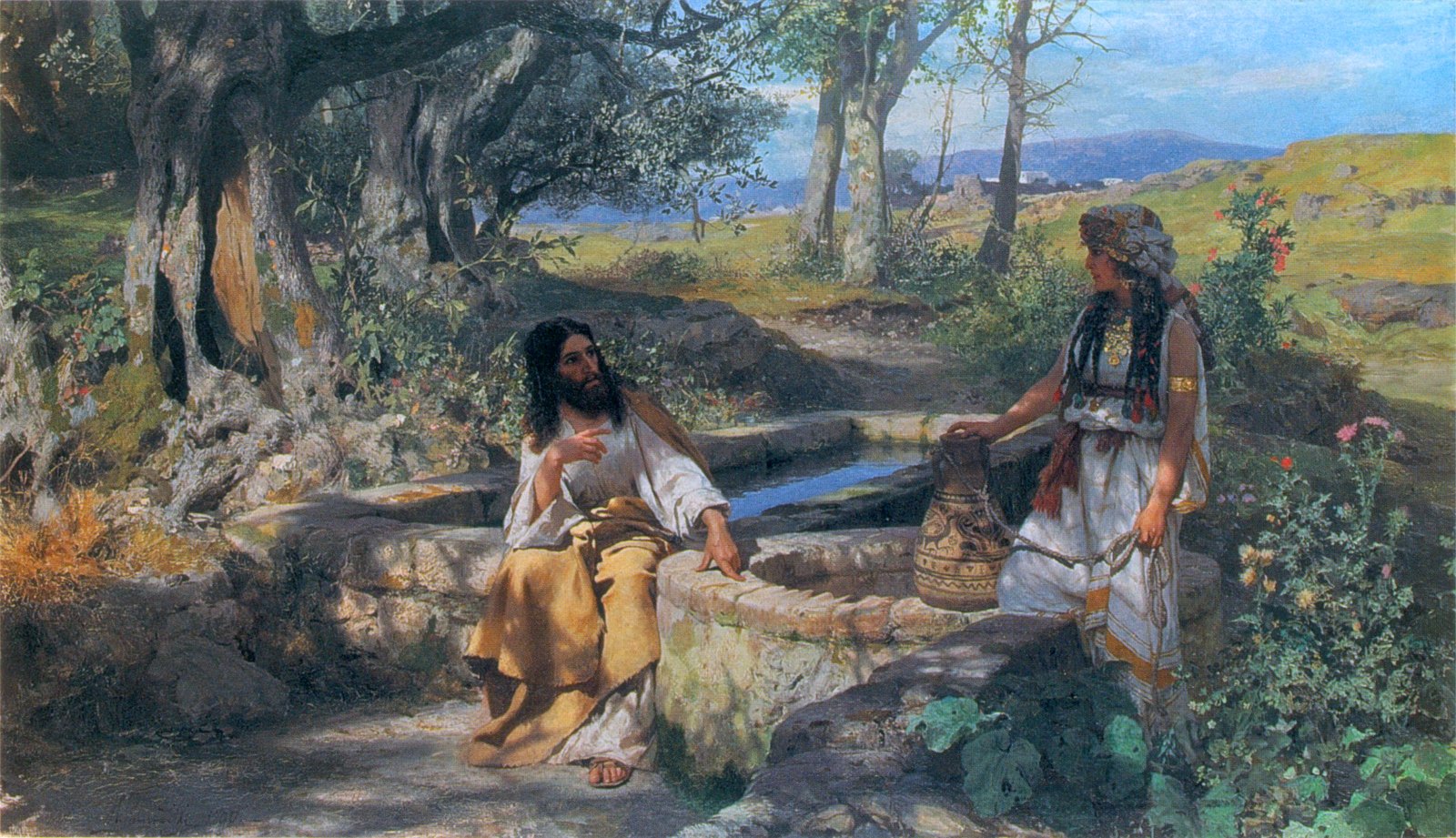
Henryk Siemiradzki and Christ and The Samaritan Woman

'Christ and The Samaritan Woman' (1890) by Henryk Siemiradzki; Lviv National Art Gallery, Lviv, Ukraine


I had never heard of Polish painter Henryk Siemiradzki, born on 15 November 1843 and died on 23 August 1902. In fact, I don't know any Polish painters. He was a 19th century artist who is best remembered for his monumental paintings. His art teacher was a former student of Russian painter Karl Briullov. He studied at the Academy of Fine Arts in St. Petersburg and went to Rome where he permanently settled. Many of his paintings are depictions of pastoral scenes from antiquity, or of biblical or historical scenes. His large-scale canvasses are to be seen in the major museums of Poland, Russia and Ukraine. Today's religious painting caught my eye because of the beautiful light.

Wednesday, 22 August 2012

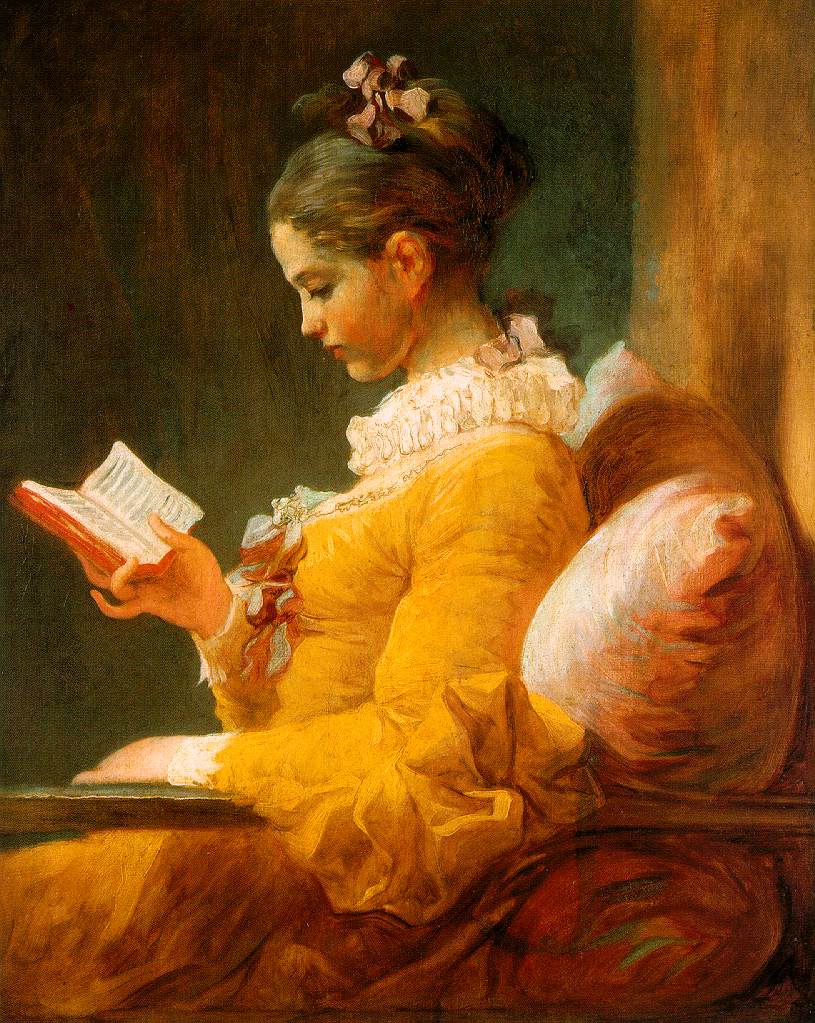
Jean-Honoré Fragonard and A Young Girl Reading

'A Young Girl Reading' (c.1770) by Jean-Honoré Fragonard;
National Gallery of Art, Washington D.C.

There's only one painting by French artist Jean-Honoré Fragonard, born on 5 April 1732 and died on 22 August 1806, that I truly like and it is this one of a girl reading. I have always liked it and will keep on liking it. It's beautiful in colour and detail and the girl is lovely to look at. Fragonard was a painter of the Rococo movement and his paintings were frivolous witty scenes in pastel-like colours. His style was lighthearted and even his most erotic subjects were never vulgar. He was a pupil of François Boucher before winning the Prix de Rome in 1752. In 1756 he left for Rome to study at the French Academy and made a special study of Italian painter Tiepolo. His work reflected 18th century life and society always on the lookout for the next diversion or entertainment. When the French monarchy came to an end, the same happened to Fragonard's popularity. His career was finished and he was reduced to poverty. For further reading on today's lovely painting, please click here.